
Easy Sourdough Focaccia Recipe: A Beginner’s Guide to Artisan Bread at Home
If you’re looking to elevate your baking game, sourdough focaccia is a delicious and rewarding bread to master. Combining the tangy flavor of sourdough with the soft, airy texture of focaccia, this bread is perfect for everything from a simple snack to an impressive centerpiece at dinner. In this guide, we’ll walk you through how to make sourdough focaccia from scratch, complete with tips for creating a light, airy crumb and a golden, flavorful crust.

Why Make Sourdough Focaccia?
Sourdough focaccia combines the best of two worlds: the rich, fermented flavor of sourdough bread and the pillowy softness of classic focaccia. Here’s why you’ll love making sourdough focaccia:
1. Unique Flavor: The natural fermentation process gives sourdough focaccia a depth of flavor you can’t achieve with commercial yeast.
2. Health Benefits: Sourdough bread is easier to digest and often has a lower glycemic impact due to its natural fermentation process.
3. Versatility: Sourdough focaccia can be topped with endless combinations of herbs, cheeses, and vegetables, making it adaptable to any meal or occasion.

Ingredients for Sourdough Focaccia
Before diving into the process, gather your ingredients. For the best results, use high-quality, fresh ingredients.
Active Sourdough Starter: ½ Cup (fed and bubbly)
Flour: 4 Cups (all-purpose or bread flour works best)
Water: 1 ¾ Cup (lukewarm)
Honey: 2 tsp.
Salt: 2 tsp. (good sea salt)
Olive oil: ¼ Cup
Optional Toppings: Fresh rosemary, cherry tomatoes, garlic, flaky sea salt, or grated Parmesan cheese.
Step-by-Step Instructions for Sourdough Focaccia
1. Feed Your Sourdough Starter
To ensure your focaccia rises properly, start by feeding your sourdough starter, ideally the night before. It should be active, bubbly, and at its peak when you’re ready to bake. This process can take 4–6 hours depending on the temperature of your kitchen.

2. Mix the Dough
In a large mixing bowl, combine of active sourdough starter, lukewarm water, and flour. Mix until a shaggy dough forms. Let the dough rest (autolyze) for 30 minutes.
Note: I’m using my bread machine here, (a gift from my husband for Christmas! LOVE it!! I’ll link the one I have here.)

3. Add Salt and honey
After the autolyse, sprinkle of salt evenly over the dough and drizzle in honeyl. Gently knead or fold the dough until the salt and honey are fully incorporated.

4. Bulk Fermentation
Cover the bowl with a damp cloth or plastic wrap and let the dough ferment at room temperature for 4–6 hours. During this time, perform 3–4 sets of stretch-and-folds, spaced 30–45 minutes apart. This helps develop gluten and create an airy crumb.
5. Prepare the Pan
Generously oil a 9×13-inch pan or baking sheet with the remaining olive oil. Transfer the dough into the pan, gently spreading it out to fill the edges. Be careful not to deflate the dough.

6. Second Rise
Cover the pan with plastic wrap or a damp towel and let the dough rise again for 2–4 hours, or until it has doubled in size and looks puffy.

7. Add Toppings
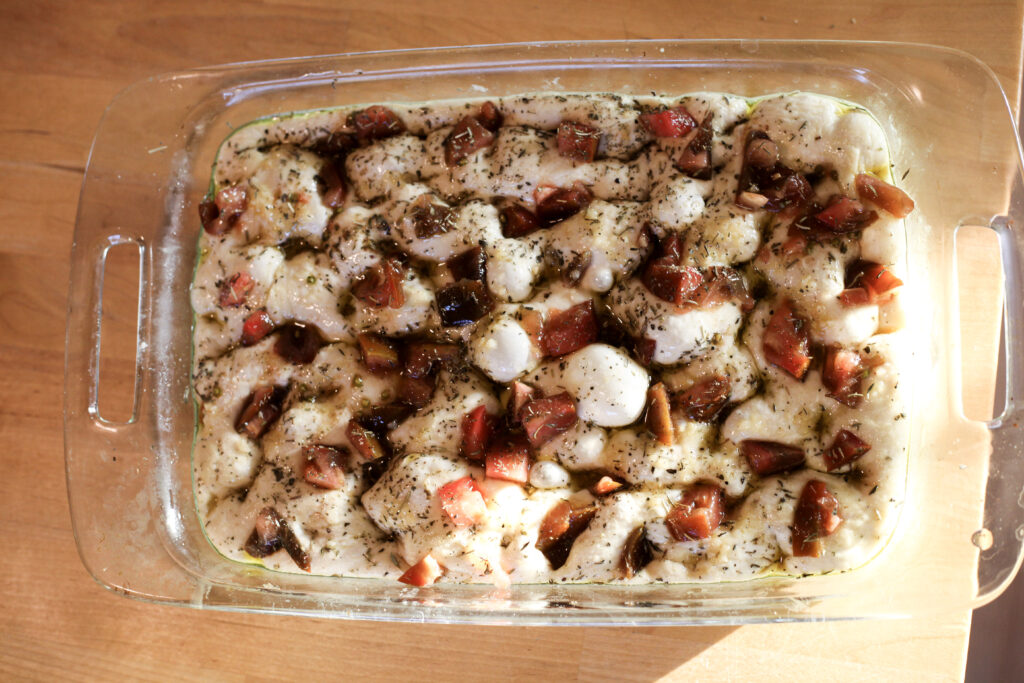
Get creative with your toppings! Classic sourdough focaccia is delicious with fresh rosemary and flaky sea salt, but you can experiment with cherry tomatoes, sliced olives, caramelized onions, or grated cheese.

8. Dimple the Dough
Preheat your oven to 425°F. Once the dough is ready, drizzle a little more olive oil over the top. Use your fingers to press deep dimples into the dough. These dimples are key to the focaccia’s signature texture and help hold any toppings you add.

9. Bake the Sourdough Focaccia
Place the pan in the preheated oven and bake for 20–25 minutes, or until the focaccia is golden brown and crisp on top.
10. Cool and Serve
Allow the sourdough focaccia to cool in the pan for 10 minutes before transferring it to a wire rack. Slice, serve, and enjoy!

Tips for Perfect Bread Everytime
1. Use a Mature Starter: A well-fed and mature sourdough starter is crucial for good rise and flavor.
2. Hydration is Key: Sourdough focaccia dough is naturally sticky and wet. Resist the urge to add more flour; the high hydration is what creates its airy texture.
3. Room Temperature Matters: Fermentation times will vary based on the temperature of your kitchen. Warmer environments will speed up fermentation, while cooler temperatures will slow it down.
4. Don’t Skip the Oil: Generous use of olive oil prevents sticking and adds incredible flavor to the crust.
Serving Ideas for Sourdough Focaccia
Sourdough focaccia is incredibly versatile and pairs well with a variety of dishes. Here are some ideas for serving:
Appetizer: Serve warm with olive oil and balsamic vinegar for dipping.
Sandwich Bread: Use slices of focaccia for hearty sandwiches filled with fresh vegetables, cheeses, and meats.
Soup Companion: Pair with tomato soup, minestrone, or any hearty stew.
Pizza Base: Transform your sourdough focaccia into a focaccia pizza by adding marinara sauce, mozzarella, and toppings.
Why You Should Try This Recipe Today?
Making sourdough focaccia is a fulfilling experience that brings together the art of sourdough baking and the rich heritage of Italian focaccia. The process may take time, but the results—a beautifully golden, aromatic bread with a tangy depth of flavor—are well worth the effort.
Whether you’re a seasoned baker or a sourdough beginner, this sourdough focaccia recipe will impress your family and friends while enriching your baking skills. Give it a try, and enjoy the satisfaction of creating a masterpiece from scratch!
Pin For Later!


Sourdough Focaccia
Ingredients
Equipment
Method
- 1. Feed Your Sourdough Starter. To ensure your focaccia rises properly, start by feeding your sourdough starter, ideally the night before. It should be active, bubbly, and at its peak when you’re ready to bake. This process can take 4–6 hours depending on the temperature of your kitchen
- 2. Mix the Dough. In a large mixing bowl, combine of active sourdough starter, lukewarm water, and flour. Mix until a shaggy dough forms. Let the dough rest (autolyze) for 30 minutes.Note: I’m using my bread machine here, (a gift from my husband for Christmas! LOVE it!! I’ll link the one I have here.
- 3. Add Salt and honey. After the autolyse, sprinkle of salt evenly over the dough and drizzle in honeyl. Gently knead or fold the dough until the salt and honey are fully incorporated.
- 4. Bulk Fermentation. Cover the bowl with a damp cloth or plastic wrap and let the dough ferment at room temperature for 4–6 hours. During this time, perform 3–4 sets of stretch-and-folds, spaced 30–45 minutes apart. This helps develop gluten and create an airy crumb.
- 5. Prepare the Pan. Generously oil a 9×13-inch pan or baking sheet with the remaining olive oil. Transfer the dough into the pan, gently spreading it out to fill the edges. Be careful not to deflate the dough.
- 6. Second Rise. Cover the pan with plastic wrap or a damp towel and let the dough rise again for 2–4 hours, or until it has doubled in size and looks puffy.
- 7. Add Toppings. Get creative with your toppings! Classic sourdough focaccia is delicious with fresh rosemary and flaky sea salt, but you can experiment with cherry tomatoes, sliced olives, caramelized onions, or grated cheese.
- 8. Dimple the Dough. Preheat your oven to 425°F. Once the dough is ready, drizzle a little more olive oil over the top. Use your fingers to press deep dimples into the dough. These dimples are key to the focaccia’s signature texture and help hold any toppings you add.
- 9. Bake the Sourdough Focaccia. Place the pan in the preheated oven and bake for 20–25 minutes, or until the focaccia is golden brown and crisp on top.
- 10. Cool and Serve. Allow the sourdough focaccia to cool in the pan for 10 minutes before transferring it to a wire rack. Slice, serve, and enjoy!
Leave a Reply