
The Inductive Bible Study Method: A Brief Introduction
The Bible is the inspired word of God, and what a wondrous gift it is! We are called as Christians to immerse ourselves in the Holy Scriptures, The Bread Of Life. While in seasons, sometimes reading a chapter a day may be all you can manage, and that’s ok. As long as you prioritize time with your Lord and Savior, He will meet you there. But if you’re ready to take it to the next level and go deeper in your daily study, let me introduce you to the Inductive Bible Study Method.

What is the Inductive Bible Study Method?
The inductive Bible study method is a three-step approach that encourages individuals to observe, interpret, and apply Scripture. Unlike deductive methods, which start with a conclusion or doctrine and then look for verses to support it, the inductive method begins with the text itself. This allows for a more organic understanding of Scripture, free from preconceived notions.
The three main components of the inductive study method are:
1. Observation: What does the text say?
2. Interpretation: What does the text mean?
3. Application: How does the text apply to my life?

By following these steps, individuals can develop a richer, more personal connection with the Bible through the inductive mehtod
Step 1: Observation
The first step in the inductive method is observation. This phase is about gathering facts and details about the text without jumping to conclusions. Here are some key techniques to enhance your observation skills:
Read the Passage Multiple Times: Read the chosen Scripture several times to become familiar with its content. Each reading can reveal new insights.
Look for Repeated Words and Themes: Identify words or phrases that appear frequently. These often indicate the main themes or messages of the text.
Identify the Context: Understanding the historical and cultural context can significantly impact interpretation. Who wrote the passage? To whom was it addressed? What were the circumstances?
Take Notes: Write down your observations. Use a journal or a digital document to record your thoughts, questions, and insights.
Ask Questions: Approach the text with curiosity. What stands out to you? What confuses you? Asking questions can lead to deeper exploration.
Step 2: Interpretation
Once you have observed the text, the next step is interpretation. This is where you begin to explore the meaning behind the words. Here are some tips to guide your interpretation:
• Use Reliable Resources: Consult commentaries, dictionaries, and other biblical resources to gain insight into the text. These can provide historical context and explain cultural nuances.
• Consider the Genre: The Bible contains various literary genres, including poetry, narrative, prophecy, and letters. Understanding the genre can help you interpret the text more accurately.
• Look for Cross-References: Scripture often interprets Scripture. Look for other passages that discuss similar themes or concepts. This can provide clarity and depth.
• Pay Attention to Structure: Analyze how the passage is organized. Are there specific patterns or structures that contribute to its meaning?
• Discuss with Others: Engaging in discussions with others can provide new perspectives. Join a study group or find a mentor who can offer guidance and feedback.
Step 3: Application
The final step of the inductive method is application. This is where the transformative power of Scripture can take root in your life. Here’s how to effectively apply the text to your daily experience:
• Reflect on Personal Relevance: Consider how the passage speaks to your current situation. What lessons or principles can you draw from it?
• Set Goals: Based on your reflections, set practical goals for how you can implement the lessons learned. This could involve changing behaviors, attitudes, or priorities.
• Pray for Guidance: Seek divine assistance in applying what you’ve learned. Prayer can help align your heart and mind with God’s will.
• Share with Others: Sharing insights with friends or family can reinforce your understanding and encourage accountability. • Review Regularly: Make it a habit to revisit your notes and reflections. This can help solidify the lessons learned and keep them at the forefront of your mind.

Tips for Effective Inductive Bible Study
Choose a Suitable Passage: Start with shorter texts, such as individual chapters or specific verses, before tackling longer books.
Set Aside Time: Designate regular time for Bible study, free from distractions, to create an environment conducive to deep reflection.
Be Patient: The inductive method requires time and patience. Don’t rush the process; allow yourself to explore the text fully.
Keep an Open Mind: Be willing to challenge your preconceived notions and be open to new insights as you study.
Pray for Wisdom: Always begin your study with prayer, asking for wisdom and understanding as you engage with God’s Word.
Conclusion
The inductive Bible study method is a powerful tool for anyone seeking to deepen their understanding of Scripture. By engaging in observation, interpretation, and application, you can develop a richer relationship with the Bible and its teachings. Whether you’re new to Bible study or looking to enhance your existing practices, the inductive method provides a structured yet flexible approach that can transform your study experience. Embrace this method and watch as the truths of Scripture come alive in your life
Save for later!
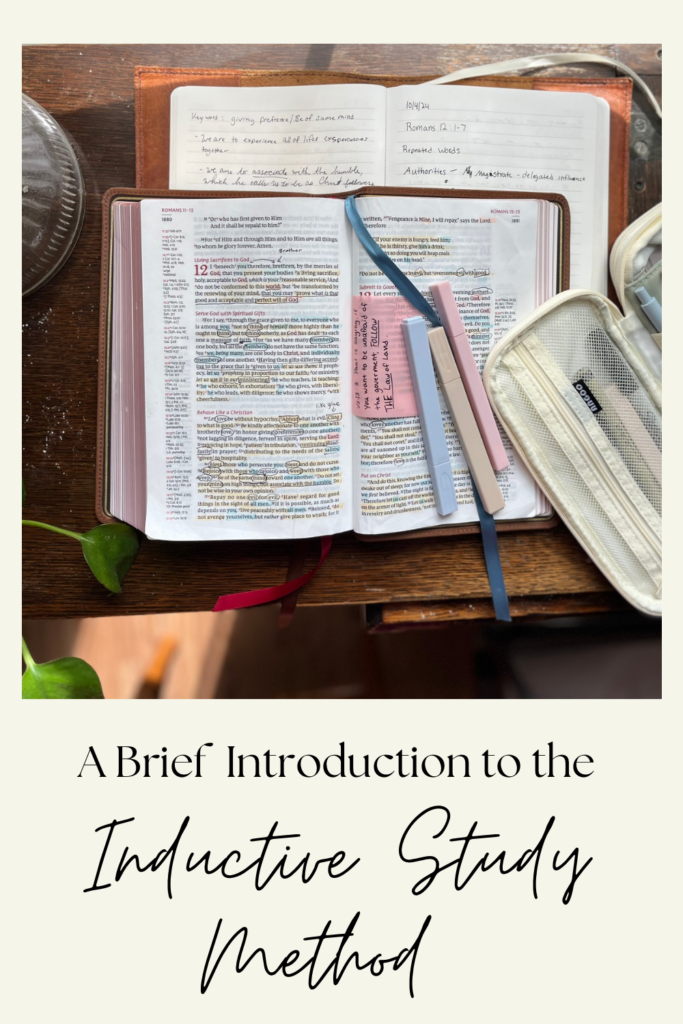
My Bible and highlighters
https://www.thomasnelsonbibles.com/product/nkjv-single-column-reference-bible/